
The Lok Sabha stalemate is expected to conclude as Speaker Om Birla has secured an agreement from all political parties to discuss the Public Examination (Prevention of Unfair Means) Amendment Bill 2026. This bill proposes stricter punishments, including up to 10 years in jail and a Rs 50 lakh fine, for paper leak offences, following recent nationwide student protests over the NEET fiasco.

After six days of stalemate, a discussion on the anti-paper leak bill began on Tuesday in Lok Sabha with the government describing it as a reaffirmation of ruling dispensation's commitment to safeguard the welfare of students but opposition hit back over the lathi-charge on protesters, saying every blow on them hurt the government's prestige more than the backs of the youth.

The Lok Sabha has approved an amendment to India's anti-paper leak law, introducing stricter punishments including jail terms of up to 10 years and fines of up to Rs 50 lakh, in response to recent large-scale student protests and the NEET paper leak case.

Monday's proceedings demonstrated that the legislative debate has become inseparable from the broader political crisis surrounding the NEET controversy.

The Union Cabinet has approved a draft bill to introduce stricter punishments for examination paper leaks, following Prime Minister Narendra Modi's announcement. This new legislation builds upon the Public Examinations (Prevention of Unfair Means) Act, 2024, aiming to curb cheating in public examinations conducted by various central agencies amidst recent controversies like the NEET and NET paper leaks.
The Indian Parliament is scheduled for a significant legislative day, with the Lok Sabha set to consider and pass the Public Examinations (Prevention of Unfair Means) Amendment Bill, 2026. Concurrently, the Rajya Sabha will introduce the Micro, Small and Medium Enterprises Development (Amendment) Bill, 2026, and pass the Prevention of Insults to National Honour (Amendment) Bill, 2026, highlighting a busy agenda for both houses.

Parliament on Thursday passed a bill to amend the anti-paper leak law to introduce stricter punishments, with the government expressing its commitment to go the extra mile to safeguard the interests of students, who are the country's future.

Parliament embraced Gen Z lingo during a Lok Sabha debate on the crucial anti-paper leak amendment bill.

The Public Examination (Prevention of Unfair Means) Amendment Bill, 2026, passed by the Lok Sabha, introduces significantly stricter punishments for individuals and organised groups involved in paper leaks and other unfair means in public examinations. The legislation aims to enhance the integrity of exams conducted by various central government agencies.

President Droupadi Murmu has given her assent to the Public Examinations (Prevention of Unfair Means) Amendment Bill, 2026, which introduces fast-track courts and significantly enhances punishment for those involved in public examination question paper leaks.

Prime Minister Narendra Modi has announced comprehensive reforms in the education system to combat paper leaks, following the passage of a new anti-paper leak law. He asserted that there would be no leniency for those involved in examination irregularities, highlighting the government's commitment to ensuring fair opportunities for students.

India is set to introduce a new amendment to its anti-paper leak law in the Lok Sabha, aiming to establish fast-track courts across all states and union territories for swift trials and significantly harsher penalties for exam malpractices, including jail terms of 5 to 10 years and fines up to Rs 50 lakh for individuals, and up to Rs 10 crore for organised crimes.

Amidst widespread student protests over the NEET paper leak, the Indian government has introduced the Public Examinations (Prevention of Unfair Means) Amendment Bill, 2026, in the Lok Sabha. The bill proposes significantly stricter punishments, including jail terms of up to 10 years and fines of up to Rs 50 lakh for individuals involved in paper leaks, and up to Rs 10 crore for organised crimes, aiming to enhance transparency and fairness in public examinations.
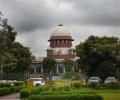
The Supreme Court has sought responses from the Centre and state governments on a Public Interest Litigation (PIL) advocating for the confiscation of movable and immovable property belonging to individuals and their family members involved in exam question paper leak cases. The plea also calls for invoking various anti-corruption and financial crime acts against perpetrators and suggests consecutive sentencing for such offences.

The Lok Sabha secretariat has requested a response from Leader of Opposition Rahul Gandhi regarding two privilege complaints filed by BJP MPs Anurag Thakur and Sanjay Jaiswal. The complaints stem from Gandhi's remarks against Home Minister Amit Shah during a debate on the anti-paper leak bill, which the BJP MPs deemed "unparliamentary" and a breach of privilege. Gandhi has until August 28 to submit his explanation to the Privileges Committee.

Opposition parties, particularly the Congress, have strongly criticised the BJP for felicitating former Union Education Minister Dharmendra Pradhan, who resigned following student protests over the NEET exam controversy. They have also dismissed the government's proposed anti-paper leak legislation as a 'cosmetic Bill' and questioned the sincerity of education reforms.

Major bills, including those on women's reservation, delimitation, and the Foreign Contribution (Regulation) Act (FCRA), face an uncertain future in the ongoing Monsoon session of Parliament due to persistent opposition protests and a lack of consensus.

The Congress party, through Deputy Leader Gaurav Gogoi, has criticised the proposed amendments to India's anti-paper leaks law, arguing that previous legislation has failed to prevent examination leaks. Gogoi highlighted the ongoing student protests and questioned the government's sincerity, particularly regarding the handling of the NEET fiasco and the welcome given to former Education Minister Dharmendra Pradhan. He also raised concerns about the National Testing Agency's accountability.

The Centre on Monday made public the rules under the recently-notified anti-paper leak law, mandating the National Recruitment Agency (NRA) to prepare norms, standards and guidelines for the computer-based tests among others.

The Lok Sabha's monsoon session concluded on Thursday, marked by relentless opposition protests over critical issues like the NEET paper leak and police action on students, yet saw the passage of several key bills without extensive debate. Home Minister Amit Shah expressed readiness to debate the student protest issue, urging the speaker to allocate time.

The DMK has been charting an independent course from the Congress-led Opposition bloc on contentious issues during the Monsoon Session, including not joining a walkout over the anti-paper leak bill and participating in a debate on the National Honour Bill, signalling growing fault lines within the Opposition.

The BJP is significantly increasing its digital engagement with young people on Instagram, led by Prime Minister Narendra Modi and several Union ministers, in response to the NEET-UG paper leak controversy and subsequent student protests. This strategic shift aims to counter the narrative and communicate government actions on examination reforms.

The Congress-led Opposition is set to keep the pressure on the government in Parliament over the alleged police brutality against protesting students, demanding action against those responsible for the assault and an apology from Prime Minister Narendra Modi, sources said on Sunday.

The Indian government has confirmed its readiness for a Lok Sabha debate on the ongoing student protests and police action, with Union Home Minister Amit Shah set to address the concerns, particularly those related to the NEET paper leak issue.

Relentless protests by Opposition parties forced the adjournment of the Lok Sabha for the day after the passage of the Bankers' Books Evidence Bill without a debate on Wednesday, with the government accusing them of coming to the House to disrupt proceedings and not for discussion.

Leader of Opposition Rahul Gandhi launched a scathing attack on Home Minister Amit Shah, alleging he authorised police excesses against student protesters and was 'scared' to face Parliament. Gandhi also accused the RSS of controlling India's education system and promoting 'andhbhakts'.

India's Monsoon Session of Parliament concluded with significantly low productivity, marked by frequent disruptions and protests from the Opposition, primarily the Congress, leading to minimal debate on key legislation.

Congress leader Priyanka Gandhi criticised Prime Minister Narendra Modi, stating he needs to change his "dil ka angle" (heart's perspective) rather than camera angles to connect with Gen Z, following his Instagram outreach to student protesters. She also condemned the government's handling of student protests and the widespread issue of paper leaks.

Opposition parties have submitted notices in the Rajya Sabha demanding an urgent discussion on the alleged use of force, including pellet guns, against students protesting the NEET paper leak issue. They are seeking accountability from the Home Minister and Prime Minister regarding the police action and alleged assault on protesters and journalists.

Congress leader Rahul Gandhi has strongly criticised the government over alleged police excesses against students, demanding Prime Minister Narendra Modi sack Home Minister Amit Shah. Gandhi also called for a Supreme Court-monitored investigation into the "brutalities" and accused the Lok Sabha of silencing him when he tried to speak on the issue.

The Indian government has significantly altered its approach to the Cockroach Janata Party (CJP)-led agitation over the NEET paper leak, moving from dismissal to calibrated political engagement, including promises of fast-track courts, a new anti-paper leak law, and negotiations with key protest leaders.

BJP MP Anurag Thakur has submitted a notice of breach of privilege and contempt of the House against Leader of Opposition Rahul Gandhi, alleging use of "unparliamentary and derogatory language" and "unsubstantiated allegations" against Home Minister Amit Shah during a Lok Sabha debate.
